
Car Rental with Pop-Up Roof in Kenya – 4×4 Self-Drive & Guided Safaris
Renting a pop-up-roof safari vehicle in Kenya gives you an elevated, unobstructed view during game drives, making it easier to watch elephants, lions, giraffes, buffalo, rhinos, and birds while remaining comfortably inside the vehicle. Whether you want the freedom of a self-drive safari or the knowledge of a professional driver-guide, choosing the right 4×4 Car rental with a pop-up roof in Kenya can make a major difference to your Kenya adventure.
See Kenya’s wildlife from the right vantage point
There is a particular moment every Kenya safari traveler remembers: the engine cuts to idle, the roof hatch rises above your head, and suddenly you are standing chest-high in the open Mara air with a lioness moving through the grass twenty meters away. No windscreen glass between you and the sound of it. No missed shot because the window frame was in the way. That moment is the entire reason the pop-up roof safari vehicle exists, and it is the reason it has become the default choice for self-drive and guided travelers exploring Kenya’s parks and conservancies.
This page exists to answer, in full and without marketing gloss, every question you are likely to have before renting a pop-up roof vehicle in Kenya: what is a pop-up roof? What does a car rental with a pop-up roof cost? Which configuration suits your trip? how the vehicle is prepared before you drive away, what the insurance actually covers, and where in Kenya (and beyond, into Tanzania, Uganda, and Rwanda) it makes the most sense.
Self Drive Kenya operates a fleet of 4×4 Land Cruisers and safari vans fitted with pop-up roofs in Kenya from a Nairobi base, and this guide draws on the practical, on-the-ground knowledge of preparing and handing over these vehicles for road trips and wildlife safaris, day after day, season after season. Whether you are travelling solo with a camera bag and a loose itinerary, as a couple planning a slow honeymoon loop through the Mara and Amboseli, or as a family of seven needing space, air conditioning, and a driver-guide who knows the terrain, the right vehicle exists, and by the end of this page you should know exactly which one it is.
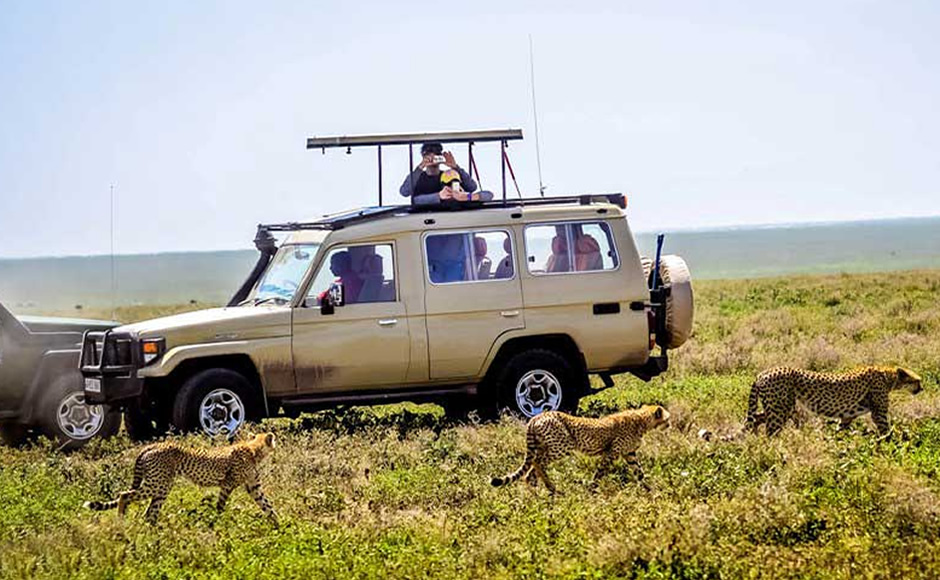
What Is a Pop-Up Roof Safari Vehicle?
A pop-up roof safari vehicle is a standard 4×4 — most commonly a Toyota Land Cruiser in Kenya — that has been modified so that a section of its roof can be raised and locked into place while the vehicle is parked or moving slowly through a park. Once raised, the hatch creates standing headroom for passengers, who can rise out of their seats to view and photograph wildlife with an unobstructed 180-to-360-degree line of sight, depending on the vehicle’s configuration. The roof is lowered and secured again for highway driving, border crossings, and ordinary road travel, so the vehicle behaves and handles like any other 4×4 outside of game-drive conditions.
The idea behind it is simple: a closed window frame and a fixed roofline are the two biggest obstacles to a good wildlife encounter. A pop-up roof removes both. It is not a camping structure and it is not a sleeping platform — it is purely a viewing and photography feature, which is an important distinction covered in more detail further down this page when we compare it against rooftop-tent vehicles.
Normal 4×4 vs. 4×4 With Pop-Up Roof vs. Rooftop Tent Vehicle
The table below sets out the practical differences between the three vehicle types most commonly confused by first-time Kenya travelers.
| Feature | Standard 4×4 | 4×4 With Pop-Up Roof | Rooftop Tent Vehicle |
| Primary purpose | General transport and light off-road driving | Wildlife viewing and photography | Camping and overnight accommodation |
| Wildlife viewing | Through side windows only | Standing view through open roof hatch | Through side windows only |
| Photography angle | Limited, window-framed | Elevated, unobstructed | Limited, window-framed |
| Sleeping arrangement | None | None | Tent mounted on roof rack |
| Best for | Point-to-point road travel | Game drives, safaris, conservancies | Overland camping trips |
| Can be combined | — | Can be paired with ground tents and camping gear | Not compatible with a pop-up roof on the same vehicle |
| Typical traveler | Business or transit trips | Safari-focused self-drive and guided travelers | Overlanders and long-distance campers |
If your priority is spending your days watching and photographing wildlife, the pop-up roof is the vehicle built for that job. If your priority is sleeping under the stars in the bush, a rooftop-tent 4×4 is the better match. Many travelers on longer Kenya road trips combine a pop-up-roof vehicle with ground tents and camping equipment rather than a rooftop tent, for reasons explained later in this guide.
Which Pop-Up Roof Safari Vehicle Is Right for You?
Not every traveler needs the same vehicle, and treating a solo backpacker and an eight-person extended family as though they have identical requirements is how rental experiences go wrong. Self Drive Kenya’s pop-up-roof fleet spans compact Land Cruisers through to extended, seven-seat configurations and safari vans, and the honest answer to “which one should I book” depends on your party size, your route, your budget, and how much you want to drive yourself versus be driven.
Solo Traveler
A solo traveler renting a pop-up-roof vehicle in Kenya is usually chasing two things: flexibility and value. You do not need the largest Land Cruiser in the fleet, and in most cases a smaller, more fuel-efficient 4×4 with a pop-up roof is entirely sufficient for parks such as Nakuru, Naivasha, Amboseli, or Aberdare, where road conditions are manageable and the priority is manoeuvrability rather than raw seating capacity. Cost is naturally lower with a smaller vehicle, both in daily rental rate and fuel consumption, and luggage space is rarely a constraint when you are travelling alone with camera equipment and a duffel bag. For photography-focused solo trips, the pop-up roof is arguably even more valuable than for groups, because you have the entire hatch to yourself with no one else competing for the same shooting angle. Self-drive suitability is generally high for confident, experienced drivers, though first-time Kenya self-drivers travelling solo often prefer a driver-guide for at least the Maasai Mara leg, purely because navigating conservancy tracks alone at dusk is a different experience to having local knowledge in the car with you. A full-size Land Cruiser is not usually necessary unless your route includes genuinely remote or technically demanding terrain such as northern Kenya’s Samburu-Laikipia corridor, where higher ground clearance and a more robust 4×4 system earn their keep.
Couple
For couples, the pop-up-roof vehicle changes the character of the whole trip. Comfort becomes a bigger consideration than for a solo traveler — a mid-size Land Cruiser gives two people generous legroom, individual window space, and enough separation from luggage that the cabin never feels cramped over a seven or ten-day loop. Photography for couples travelling together works well in a pop-up-roof vehicle because both partners can stand through the hatch at once in most configurations, meaning neither person is stuck watching a leopard through a side window while the other gets the better angle. Luggage for two is comfortably accommodated in every pop-up-roof Land Cruiser in the fleet, including duffel bags, a cooler box, and camera bags. Privacy is one of the underrated benefits of a self-drive pop-up-roof rental for couples — no shared vehicle with strangers, no fixed group schedule, and the freedom to linger at a sighting for as long as you like or turn back early if you are tired. Self-drive flexibility suits most couples who want a slower, more intimate pace, while the guided option remains available for couples who would rather sit back, let a driver-guide manage navigation and animal-tracking, and focus entirely on each other and the landscape.
Family
Families bring a different set of priorities entirely, and this is where vehicle selection genuinely matters. Seating needs to account for car seats or booster seats for younger children, and Self Drive Kenya’s family-configured Land Cruisers are set up with this in mind. Luggage capacity has to stretch across multiple bags, strollers in some cases, and the general volume of gear a family trip generates, so a mid-to-large Land Cruiser is usually the sensible baseline rather than a compact model. Children on long driving days do best in a vehicle with air conditioning that can keep the cabin comfortable through the heat of an Amboseli or Tsavo afternoon, and every pop-up-roof vehicle in the fleet is air-conditioned for exactly this reason. Safety is naturally the first question most parents ask, and it is addressed in full detail in the vehicle preparation and handover sections further down this page — every vehicle is inspected before departure regardless of who is renting it. Many families, particularly those travelling with grandparents or very young children, opt for the driver-guide option so that one adult is not solely responsible for both driving unfamiliar roads and managing children in the back seat at the same time; it is consistently one of the most popular configurations for family safaris in Kenya.
Family of 4–5
A family of four to five is comfortably served by Self Drive Kenya’s standard pop-up-roof Land Cruiser configuration, which seats this range with proper legroom, individual window access for game viewing, and enough boot space for a week to ten days of luggage without needing a roof box. This is the most commonly booked configuration on the fleet for exactly this reason — it balances space, fuel economy, and manoeuvrability on park tracks better than the larger extended vehicles, while still giving every family member their own space at the pop-up hatch during a sighting.
Group of 6–8
Groups of six to eight — typically extended families, multi-generational trips, or friends travelling together — need to move up to the extended Land Cruiser or safari van category. Self Drive Kenya’s extended Land Cruiser and pop-up-roof configuration is currently set up to accommodate up to seven passengers, with correspondingly more luggage space, while the safari van option is built specifically around larger groups who prioritize everyone travelling together in one vehicle rather than splitting into two smaller cars. It’s worth being precise here rather than quoting one blanket capacity figure for the whole fleet: seating and luggage capacity vary from vehicle to vehicle, and the safari van’s layout is not identical to the extended Land Cruiser’s, so groups above eight people, or groups with heavy luggage requirements, are usually better served by two vehicles travelling together than by squeezing into a single one. Speak to the team about your exact numbers and luggage volume and they will match you to the configuration that keeps everyone comfortable rather than defaulting you into whichever vehicle happens to be available.
How Much Does a Pop-Up Roof Car Rental Cost in Kenya?
Pop-up-roof rental pricing in Kenya is not a single flat number, and any operator that quotes you one price without asking a single question about your trip is skipping steps that matter. The final daily rate depends on the vehicle you choose, since a compact pop-up-roof 4×4 costs less to run than an extended seven-seat Land Cruiser or a safari van. It depends on the number of travelers, because larger groups are matched to larger vehicles with different base rates. Rental duration matters too, with longer bookings typically earning a better daily rate than a single weekend hire. Whether you choose self-drive or a driver-guided package changes the price meaningfully, since a driver-guided rental includes the driver’s daily fee, accommodation and subsistence on multi-day trips, and their local expertise. Season affects pricing as well — Kenya’s high season, broadly July through October and the December holiday period, sees higher demand across the whole rental market, while the shoulder and low seasons often bring more competitive rates. Your pickup and drop-off location plays a role too: a straightforward Nairobi pickup and return is priced differently to a one-way rental that drops you at the Tanzanian border or in Kigali. Camping equipment, if you add ground tents, cooking gear, or a fridge, adds to the daily cost, as does your chosen insurance and excess level, cross-border travel permits and fees if you are heading into Tanzania, Uganda, or Rwanda, and any additional equipment such as a second spare tyre, extra jerry cans, or a satellite communication device for remote routes.
As a starting reference point, self-drive pop-up-roof rentals begin from around $150 per day, while driver-guided pop-up-roof rentals begin from around $200 per day, with both figures varying upward based on the factors above. Treat these as a floor for budgeting purposes rather than a fixed quote — the accurate number for your trip depends on your dates, vehicle choice, and route, and the team will work through those specifics with you directly.
What’s Included With Your Pop-Up Roof Rental?
Clarity here is where a lot of first-time Kenya renters get caught out, so it is worth separating this into what comes standard with the vehicle, what is available as an optional add-on, and what is never included in any rental regardless of vehicle or provider.
What’s included in the vehicle
Every pop-up-roof rental includes genuine 4×4 capability suited to park tracks, murram roads, and variable terrain, the pop-up roof hatch itself in full working order, a properly inspected spare tyre and the tools required to change it, and the base safety and mechanical equipment expected of a roadworthy safari vehicle — jack, warning triangle, first-aid kit, fire extinguisher, and comprehensive documentation for the vehicle.
What’s optional
Depending on your trip, you can add a driver-guide for all or part of your route, a GPS unit or offline navigation support for self-drive routes through remote parks, a fridge or cooler box to keep food and drinks cold across multi-day trips, and a full camping equipment package covering ground tents, sleeping gear, and cooking equipment for travelers combining their safari with bush camping. Additional equipment such as extra fuel jerry cans, a second spare tyre for very remote routes, or a satellite phone for northern Kenya circuits can also be arranged on request.
What’s not included
Fuel is not included in any rental rate and is the renter’s responsibility throughout the hire period. Park entry fees for Kenya Wildlife Service parks and private conservancies are paid separately, either in advance or at the gate, and vary by park and nationality. Accommodation, whether lodges, camps, or campsite fees, is arranged and paid for independently unless you have specifically booked a package that bundles it in. Personal expenses — meals, drinks, souvenirs, tips for driver-guides or camp staff — are also outside the scope of the vehicle rental itself.
Why Rent a Pop-Up Roof Safari Vehicle in Kenya?
The honest case for a pop-up-roof vehicle comes down to what you actually experience during a game drive. Kenya’s parks and conservancies are built around wildlife sightings that unfold at eye level with the grass — a cheetah stalking through the plains of the Mara, a herd of elephants crossing a dry riverbed in Tsavo, a leopard draped over a tree branch in Samburu. A closed sedan or a standard 4×4 forces you to view all of this through a window frame, competing with reflections and limited sightlines. The pop-up roof removes that barrier entirely. You gain elevation, a wider field of view, better photographic angles with nothing between your lens and the subject, and — for many travelers — a genuinely different emotional experience of being present in the landscape rather than observing it from behind glass. It is also a practical vehicle outside of game drives: closed and secured, it drives, handles, and performs exactly like any other 4×4 on tarmac, murram, or highway.
Can I Self-Drive a Pop-Up Roof Safari Vehicle in Kenya?
Yes. Self-driving a pop-up-roof Land Cruiser in Kenya is entirely normal and is, in fact, the most popular way travelers experience the country’s parks. Kenya’s major circuits — Nairobi to the Mara, the Nairobi–Nakuru–Naivasha loop, Amboseli, and Tsavo — are all manageable for a reasonably confident self-driver, and every vehicle handed over comes with a full briefing on the 4×4 system, the roof mechanism, and route guidance before you leave Nairobi. Self-driving gives you complete control over your pace: you can stay at a sighting for forty minutes if you want to, skip a stop that does not interest you, and structure each day around your own energy levels rather than a group itinerary.
Driver-Guided Safari
A driver-guide is the right choice for travelers who want local wildlife knowledge without having to learn it themselves, who are visiting Kenya for the first time and would rather not navigate unfamiliar park tracks or night driving on rural roads, or who simply want every member of the group — including the person who would otherwise be driving — free to look up and enjoy the game drive. Driver-guides working with pop-up-roof vehicles know where sightings are likely at different times of day, how to position the vehicle for photography without disturbing the animal, and how to handle the practical realities of border crossings, park permits, and route conditions on longer trips. Many couples and families choose a hybrid approach: self-drive for the more straightforward legs of the trip, and a driver-guide specifically for the Maasai Mara, where local knowledge of conservancy tracks makes a measurable difference to the sightings you get.
Pop-Up Roof Safari Vehicles by Destination
The value of a pop-up roof is not identical in every part of Kenya — the terrain, wildlife density, and driving conditions of each destination change what the vehicle is actually doing for you.
In the Maasai Mara, the pop-up roof earns its reputation more than anywhere else in the country. Open grassland, high predator density, and close-range sightings of lion, cheetah, and the annual wildebeest migration make the elevated, unobstructed view genuinely transformative — this is the destination most travelers specifically request a pop-up-roof vehicle for.
In Amboseli, the flat, dry plains beneath Mount Kilimanjaro give the pop-up roof an equally strong role for photography, particularly for elephant herds crossing open ground with the mountain as a backdrop — the elevation removes foreground clutter that would otherwise interrupt the shot.
In Tsavo East, the vast, open red-earth landscape rewards the same elevated view for spotting wildlife at distance across huge sightlines, while Tsavo West’s denser bush and volcanic terrain benefit from the pop-up roof’s improved visibility through thicker vegetation.
Samburu and its surrounding reserves in northern Kenya present rougher, more remote terrain where the 4×4 capability of the vehicle matters as much as the roof itself, and the pop-up hatch adds real value for the region’s unique wildlife, including Grevy’s zebra, reticulated giraffe, and gerenuk.
Ol Pejeta Conservancy combines strong rhino and predator populations with well-maintained tracks, making it an accessible, high-reward destination for a pop-up-roof self-drive, particularly for travelers based around Nanyuki.
Lake Nakuru National Park, with its dense forest fringes and flamingo-lined shoreline, benefits from the roof’s wider field of view for both birdlife photography and the park’s substantial rhino sanctuary.
Lake Naivasha, while less of a classic game-drive destination, still rewards the pop-up roof for boat-adjacent wildlife viewing and photography around Hell’s Gate and the lake’s resident hippo population.
Meru National Park, remote and less visited than Kenya’s headline parks, is an underrated pop-up-roof destination precisely because its lower visitor numbers mean longer, more relaxed sightings once you find wildlife.
Laikipia and Nanyuki, sitting at the base of Mount Kenya, combine conservancy-style game viewing with easy access from Nairobi, making them a popular add-on leg for travelers extending a Samburu or Ol Pejeta itinerary.
Aberdare National Park’s dense montane forest is a different kind of driving environment altogether, where the 4×4 system matters more than the roof for navigating forest tracks, though the pop-up hatch still adds value at the park’s open moorland sections.
And Mount Kenya, while primarily a trekking destination, is often combined with a pop-up-roof rental for travelers road-tripping the wider central Kenya circuit rather than for game viewing itself.
Tell Us About Your Trip: Find Your Vehicle
Answer these four questions honestly and you’ll have a strong starting point for the right configuration before you even speak to the team.
How many people are travelling? A party of one or two is best matched to a standard or compact pop-up-roof Land Cruiser. Three to four travelers fit comfortably into the standard family configuration. Five to seven travelers should look at the extended Land Cruiser. Eight or more should plan on either the safari van or two vehicles travelling together.
Self-drive or driver-guide? If you are a confident, experienced driver who wants full control of your pace, self-drive is the right call. If you would rather focus entirely on the wildlife and let someone else handle navigation and route knowledge, choose a driver-guide. If you are not sure, a hybrid approach — self-drive for the easier legs, driver-guide for the Mara — is worth discussing.
Where are you going? Maasai Mara, Amboseli, Tsavo, and Samburu each have slightly different vehicle demands as set out in the destination section above. Multi-park itineraries and cross-border routes into Tanzania or Uganda call for a more robust vehicle and, in most cases, a driver-guide familiar with the border process.
What matters most to you? If wildlife viewing and photography are the priority, the pop-up roof is doing the heavy lifting and vehicle choice should focus on giving everyone hatch access. If comfort and budget are the priority, a mid-size Land Cruiser balances both well. If off-road capability or group space is the priority, that points toward the extended Land Cruiser or safari van.
Once you have answers to those four questions, the team can recommend the specific vehicle configuration that fits your trip — reach out directly and they will talk it through with you rather than pointing you at a generic listing.
Why Travelers Trust Self Drive Kenya
Trust in a vehicle rental, especially for a safari or cross-border road trip, is built on things you can verify rather than things you are told. Self Drive Kenya operates from a physical Nairobi office at View Park Towers, 14th Floor, Utalii Lane, Nairobi — a real, staffed location rather than a booking platform with no fixed address. The fleet is a genuine, maintained set of Land Cruisers and safari vans rather than a photo library of vehicles sourced from third parties, and the team preparing and handing over each vehicle does so as a daily operational routine, not a one-off checklist assembled for marketing purposes.
Real Vehicle Preparation
Before any pop-up-roof vehicle leaves the yard, it goes through a full inspection covering the general condition of the vehicle inside and out, tyre condition and tread depth on all four wheels, a check of the spare tyre to confirm it is inflated and roadworthy, fluid levels including oil, coolant, and brake fluid, brake performance, the 4×4 drivetrain and transfer case, the pop-up roof mechanism itself to confirm it raises, locks, and lowers correctly, the presence and condition of safety equipment including the jack, warning triangle, fire extinguisher, and first-aid kit, a full interior and exterior clean, and a structured handover with the customer before the keys change hands.
What Happens Before You Drive Away?
This is the part most international travelers genuinely worry about, and it deserves a straight answer rather than a vague reassurance. The handover follows a consistent sequence: first, a vehicle inspection carried out together with you, so you can see the condition of the car and raise any questions before you sign anything. Second, an explanation of the 4×4 system — how to engage it, when you will need it, and how it behaves on different surfaces. Third, a walkthrough of the pop-up roof operation, including how to raise and lower it safely and when it should and should not be used. Fourth, a review of the tyres and spare, including where the spare and jack are stored and how to use them if you need to. Fifth, an explanation of emergency procedures, including who to call and what to do in the event of a breakdown or accident. Sixth, a clear explanation of the insurance and excess that applies to your rental. Seventh, the fuel policy, so there is no ambiguity about the tank level at pickup and return. Eighth, the mileage policy, so you know whether your rental is unlimited or capped. Ninth, a review of the full rental agreement together, so nothing in the paperwork is a surprise. And tenth, you sign the handover documentation, at which point the vehicle and the trip are genuinely yours. This sequence is designed to leave you with nothing hidden and nothing assumed — everything you need to know is covered before the engine starts.
Pop-Up Roof Rental Insurance & Damage Policy
Insurance is the section travelers most often skim past and most often regret skimming past, so here it is in plain terms. Vehicle insurance on a pop-up-roof rental covers standard mechanical and collision risk to the vehicle itself under the terms agreed at handover, with an excess amount payable by the renter in the event of a claim — the exact figure depends on the vehicle and the excess-reduction option you choose at booking. Certain items are typically treated separately from the core vehicle policy and are worth asking about specifically: tyres are generally the renter’s responsibility for damage caused by misuse or driving on inappropriate terrain, though normal wear is covered; windshield damage from stone chips on murram roads is common enough on Kenyan safari routes that it is worth confirming coverage before you leave; underbody damage from off-road driving outside recommended routes is usually excluded; and the pop-up roof mechanism itself, along with any camping equipment added to your rental such as ground tents, cooking gear, or a fridge, is typically covered under separate accessory terms rather than the main vehicle insurance policy — this mirrors how the rental agreement treats rooftop tents and camping equipment as distinct from the vehicle’s core coverage, and it is a distinction worth understanding clearly before you add camping gear to a pop-up-roof booking. Recovery costs if the vehicle becomes stuck or immobilised outside of a mechanical fault are generally the renter’s responsibility, as is any damage resulting from negligence, driving in restricted or off-limits areas, or allowing an unauthorized driver to operate the vehicle. None of this is designed to catch you out — it exists to be read and understood at handover, which is exactly what step six and step nine of the handover sequence above are for.
We offer Safari land cruiser extended with a driver guide for 7 people, Land cruiser V8 for at most 4 pax, 6 – 8 mini vans or Safari vans for large groups on self drive or with a driver guide.
Pop up roof Land cruisers are considered perfect jeeps, to enjoy the best wildlife viewing experience out of what East Africa wildlife national Parks has to offer including Masai mara National Park, Queen Elizabeth national Park, Amboseli national Park, Murchison Falls national Park, Serengeti National Park among others .
Pop Up Car Rental Fleets from Self Drive Kenya
All our vehicles are regularly checked and maintained to the highest safety standards.We also offer chauffeurs for across east African safaris upon request. Currently available are Toyota Land Cruisers which include; Land cruiser TZ/Tx, Extended Land Cruiser, Land cruiser v8 and Safari Vans
Extended Land cruiser with Pop Up Roof
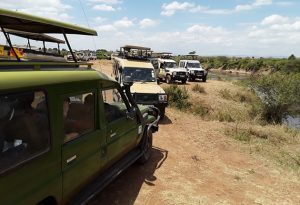
Safari or Mini Vans with Pop Up Roof
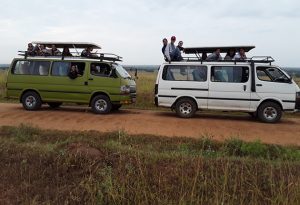
Land Cruiser Tx/TZ with Pop Up Roof
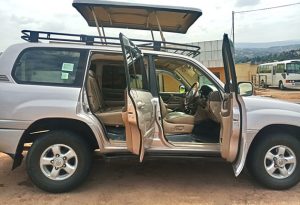
Why Use A car/Land cruiser with Pop Up roof in Kenya
All our Land cruisers with pop up roofs are spacious enough to allow each travelers set up their cameras on their windows for better wildlife Photography
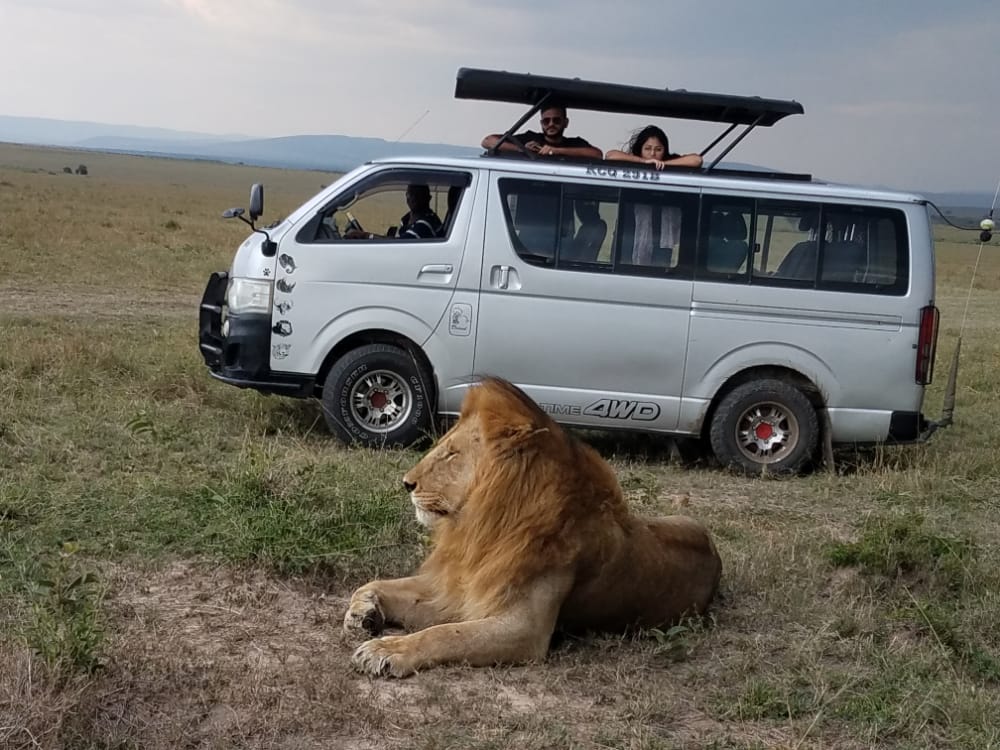 The 4×4 safari Land cruisers are designed for 7 passengers to sit comfortable to allow better wildlife viewing through the roof hatct and the pop up roof
The windows are also large enough to for better aeration, and ventilation within the car.
The Safari Land cruisers which accommodate 8 persons including a driver guide has a walkie talkie installed so as to enable the driver communicate with other drivers withing the park, in order to find the location of the animals such as leopards, lions etc.
The 4×4 Land cruisers with pop up roof, feature air conditioners, ports for charging phones, music systems, coolerbox or fridge to preserve the drinks, not forgetting the Shock Absorbers to reduce on the bumps on our African roads.
All Land cruisers with pop up roof, come with an extra spare wheel, although the extended safari Land cruiser has two. The spare tires come handy with car jacks to help during any incidence of breakdown.