
Long Term Car Rental in Kenya – 4×4 Self-Drive & Safari Hire
Can I rent a car long-term in Kenya? Yes. Long-term car rental in Kenya is suited to travelers, safari planners, expatriates, researchers, businesses, and other visitors who need a vehicle for several weeks or months rather than a few days.
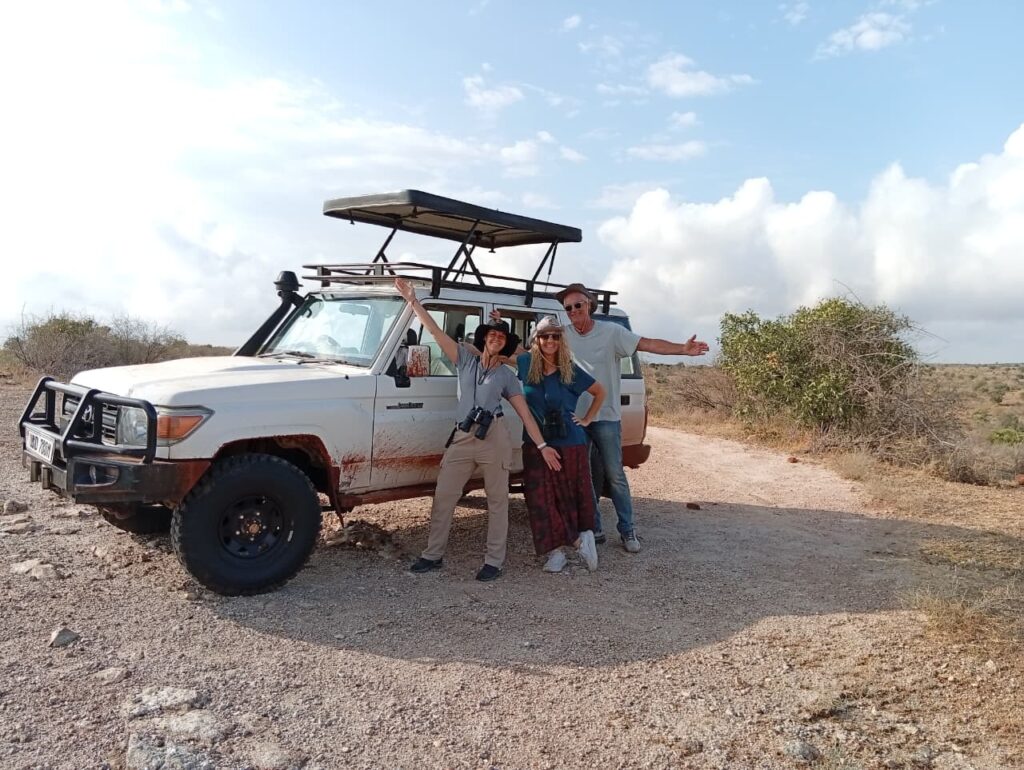 Depending on the rental period, vehicle type, and intended use, you can choose a 4×4 for self-drive travel, safari, and camping, or arrange a vehicle with a professional driver. Long-term rentals should be quoted according to the vehicle, rental duration, mileage, insurance, maintenance, camping equipment, and other applicable rental terms, rather than a single generic monthly rate.
Stay longer. Explore farther. Have one reliable vehicle for the journey. That is the entire case for renting long-term in Kenya, not a discount, not a gimmick, but the freedom of building your weeks or months around a single, well-prepared 4×4 rather than a string of separate bookings, handovers, and unfamiliar vehicles. Whether you are a solo traveler with an open-ended route through the Rift Valley, a couple planning a month combining safari and coast, a family relocating temporarily to Nairobi, or a group of friends building a genuine overland circuit through Kenya and into Uganda, Tanzania, or Rwanda, a long-term rental gives you one vehicle to learn, trust, and build an entire journey around.
What Counts as a Long-Term Car Rental in Kenya?
There is no single industry-wide cutoff at which a rental becomes “long term,” but in practical terms, the conversation changes meaningfully once you move beyond a short holiday hire.
- A rental of two to four weeks starts to behave differently from a weekend or week-long booking; mileage, servicing intervals, and route planning all become part of the discussion rather than an afterthought.
- A one-month rental is the point at which most travelers, expatriates, and short-term assignees start thinking in terms of a long-term arrangement, with servicing likely to fall due at least once during the rental.
- Two-month and three-month rentals typically involve at least one scheduled service, more detailed route and mileage planning, and a closer look at insurance and excess terms given the extended exposure.
- Six-month rentals are common among expatriates, researchers, and organizations with extended assignments in Kenya, and rentals longer than six months are generally treated as a fully custom arrangement, built around the specific individual or organization’s needs.
The longer you keep a vehicle, the more important it becomes to discuss the rental period, mileage, maintenance, insurance, vehicle use, and pricing before booking so that both sides are working from the same expectations from day one.
Who Should Consider a Long-Term Car Rental in Kenya?
Long-stay travelers, those spending several weeks or months in the country rather than a single trip, often find a long-term rental considerably more convenient than repeatedly arranging short rentals, each with its own handover, paperwork, and vehicle familiarization.
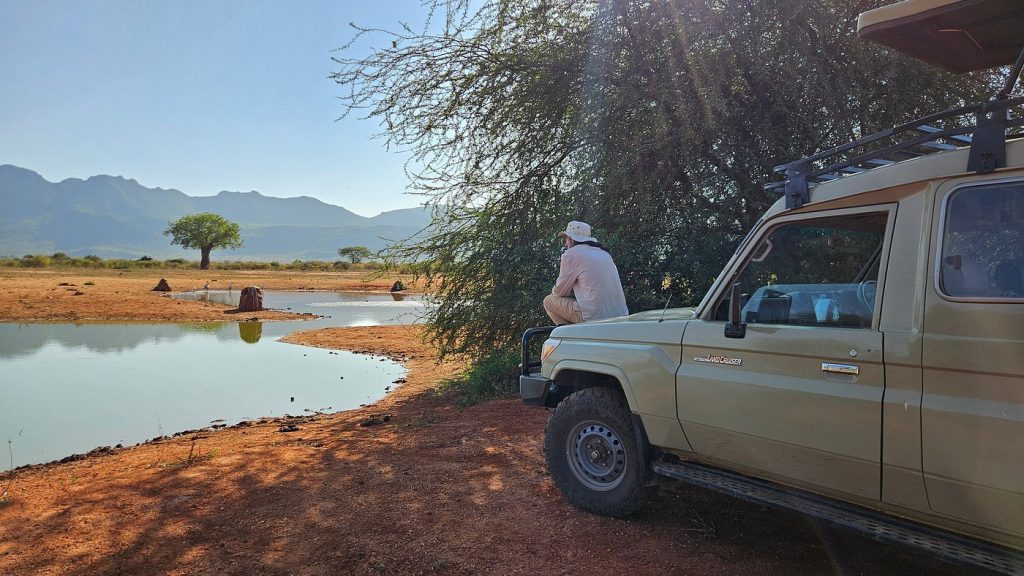 Self-drive adventurers naturally fit a long-term 4×4, as they are keen to explore Kenya entirely at their own pace without a fixed group itinerary, making the vehicle the backbone of a genuinely open-ended route.
- Camping travelers represent one of the strongest use cases of all: pairing a long-term rental with a camping setup turns the vehicle into a mobile base for weeks of road-tripping between parks, conservancies, and coastal stops without ever needing to book a hotel room in advance.
- Safari travelers spending several weeks moving between different wildlife destinations can use a single vehicle throughout the entire trip rather than renting separately at each stop, which keeps both cost and logistics simpler.
- Businesses and organizations frequently need vehicles for employees, field operations, or extended assignments across Kenya, where a long-term arrangement removes the administrative overhead of repeated short-term contracts.
- Researchers and photographers undertaking extended fieldwork or wildlife photography projects benefit from long-term access to a properly equipped 4×4, since their schedules rarely map neatly onto short rental periods.
- And travelers combining Kenya with neighboring countries, building a genuine East Africa itinerary across Uganda, Tanzania, or Rwanda, can, where permitted under the applicable rental agreement, extend a long-term rental across borders, with the specific permissions and documentation requirements confirmed before departure.
Long-Term Car Rental With Camping Gear in Kenya
Want to spend weeks exploring Kenya without relying on hotels every night? A long-term rental can be combined with a camping setup for travelers who want to turn their vehicle into the base for an extended camping safari, subject to the selected vehicle, equipment availability, and rental terms. The experience such an arrangement creates is genuinely different from a conventional trip: vehicle, campsite, safari, pack camp, drive, new destination, new campsite, repeated for as many weeks as your rental runs, with no fixed accommodation booking pinning you to a schedule set months in advance.
| Long-Term Camping | Hotels/Lodges |
| Outdoor experience | Traditional accommodation |
| More flexible route planning | Accommodation booked separately |
| Vehicle plus camping setup | Vehicle plus hotel or lodge |
| Suitable for adventurous travelers | Better for travelers prioritizing comfort |
| Can access authorized campsites | Usually tied to fixed accommodation locations |
| Cooking may be part of the experience. | Meals and services usually provided |
| More hands-on | More convenient |
Camping is not simply a cheaper alternative to hotels. It is a different way of experiencing Kenya, one built around movement and the outdoors rather than fixed check-in times, and it is covered in far greater depth on our dedicated camping-gear rental page, which walks through campsite realities, equipment, and what a day on a long camping road trip actually looks like.
Long-Term Self-Drive Car Rental in Kenya
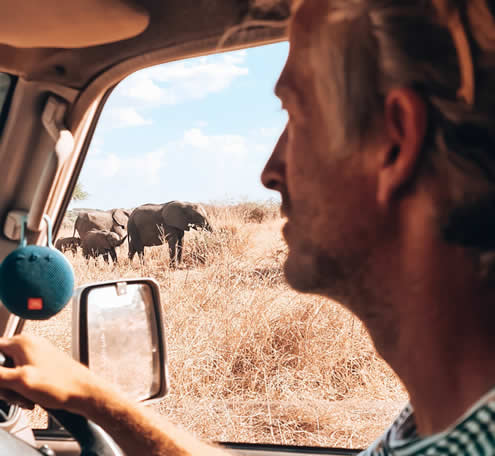 Choosing to self-drive for an extended period comes down to a fairly clear set of reasons: independence over your route and schedule, privacy that a group tour or fixed driver arrangement can’t offer, the flexibility to change your itinerary as you go, no daily driver cost stacking up over weeks or months, the genuine pleasure of a long road-trip experience rather than a series of transfers, and, if camping is part of your plan, a self-drive rental suits an extended camping itinerary particularly well. But independence comes with real responsibility, and it’s worth being direct about it: with a self-drive rental, you are responsible for driving, navigation, day-to-day vehicle care, and complying with the rental agreement and Kenyan road regulations for the full duration of your rental, not just the first week. Over a long rental period, that responsibility compounds; you are the one noticing a tire wearing unevenly, keeping track of your next service interval, and making sensible calls about which roads and conditions are appropriate for your vehicle and experience level.
Long-Term Car Rental With Driver in Kenya
Some travelers simply don’t want to drive for several weeks or months, and that’s a perfectly reasonable choice for an extended Kenya trip. A long-term driver-guided rental can be appropriate for travelers who want someone else to handle driving and navigation throughout an extended safari or road trip, giving you a professional driver with genuine local knowledge, safari experience, strong navigational familiarity with Kenya’s parks and rural roads, an eye for wildlife viewing built from doing this work day after day, and perhaps most valuable over a long trip, a meaningful reduction in the fatigue and stress that comes with weeks of unfamiliar driving. It’s important to be clear on the commercial structure here too: whether the driver’s fee is bundled into your quoted long-term rate or priced separately as a daily add-on depends on the specific arrangement you book, and this detail should always be confirmed clearly in your quotation before you commit, rather than assumed.
Should I rent a long-term or book several short rentals?
| Long-Term Rental | Multiple Short Rentals |
| One vehicle throughout the trip | The vehicle may change between bookings. |
| Less rental administration | Repeated contracts and handovers |
| Convenient for extended trips | Can suit changing requirements |
| Potentially better negotiated rate | Short-term rates may be higher per day. |
| Familiarity with one vehicle | Opportunity to change vehicle type |
| Better for long, continuous road trips | Better for separate, distinct trips |
Long-term Car rental In Kenya isn’t automatically cheaper. Compare the total cost, including the rental rate, insurance and excess, mileage, fuel, maintenance arrangements, camping equipment, and any other applicable charges, before assuming that a longer commitment is the more economical choice for your specific trip.
How Much Does Long-Term Car Rental Cost in Kenya?
For long-term customers, the honest answer is that the cost of long-term car rental in Kenya is based on several factors rather than a single published monthly figure.
- Vehicle type is the starting point, since a compact 4×4 costs meaningfully less to run over months than an extended Land Cruiser or safari van.
- Rental duration itself affects the rate, as does your pickup and return location, particularly if you’re collecting in Nairobi and returning elsewhere in Kenya or across a border.
- Mileage matters over a long rental in a way it rarely does over a weekend, since months of driving can accumulate significant distance.
- Whether you choose self-drive or a driver guide changes the cost structure, as does your chosen level of insurance and excess.
- Camping equipment, if added, contributes its own cost, and cross-border travel into Tanzania, Uganda, or Rwanda brings additional permits and considerations.
- How the vehicle will actually be used, daily short trips around a base city versus a continuous multi-week road trip, and the maintenance requirements that follow from that use both feed into pricing, alongside seasonal demand and any applicable taxes or fees.
In a nutshell, a simple way to think about the shape of a Long Term rental quote in Kenya is that the estimated rental cost equals the vehicle’s rate multiplied by the rental period, plus any applicable options and fees such as a driver, camping equipment, or cross-border permits. The exact figure for your trip depends on all of the above, worked through together with the team rather than assumed from a generic number.
Which Vehicle Is Best for Long-Term Rental in Kenya?
| Vehicle | Best For | Self-Drive | Driver | Camping |
| Nissan X-trail | Road trips, but not remote Parks | Yes. | Yes. | Depending on configuration |
| Land Cruiser LX | Extended safari and general travel | Yes. | Yes. | Depending on configuration |
| Extended Land Cruiser | Larger groups | Yes. | Yes. | Depending on configuration |
| Safari Van | Larger safari groups | Depending on the vehicle | Yes. | Depending on configuration |
Each vehicle has its own dedicated page with full specifications, and it’s worth reading through the Land Cruiser V8, Land Cruiser LX, Extended Land Cruiser, and Safari Van pages directly if you already have a sense of which category fits your trip.
Why a 4×4 Matters for Long-Term Safari Travel
Over the course of a long rental, the case for a proper 4×4 becomes stronger rather than weaker. Rough roads and rural routes outside Kenya’s main highways are a normal part of any extended itinerary, and in national park conditions in particular, murram tracks, river crossings, and rutted roads during the rains demand genuine off-road capability rather than a vehicle that merely looks the part.
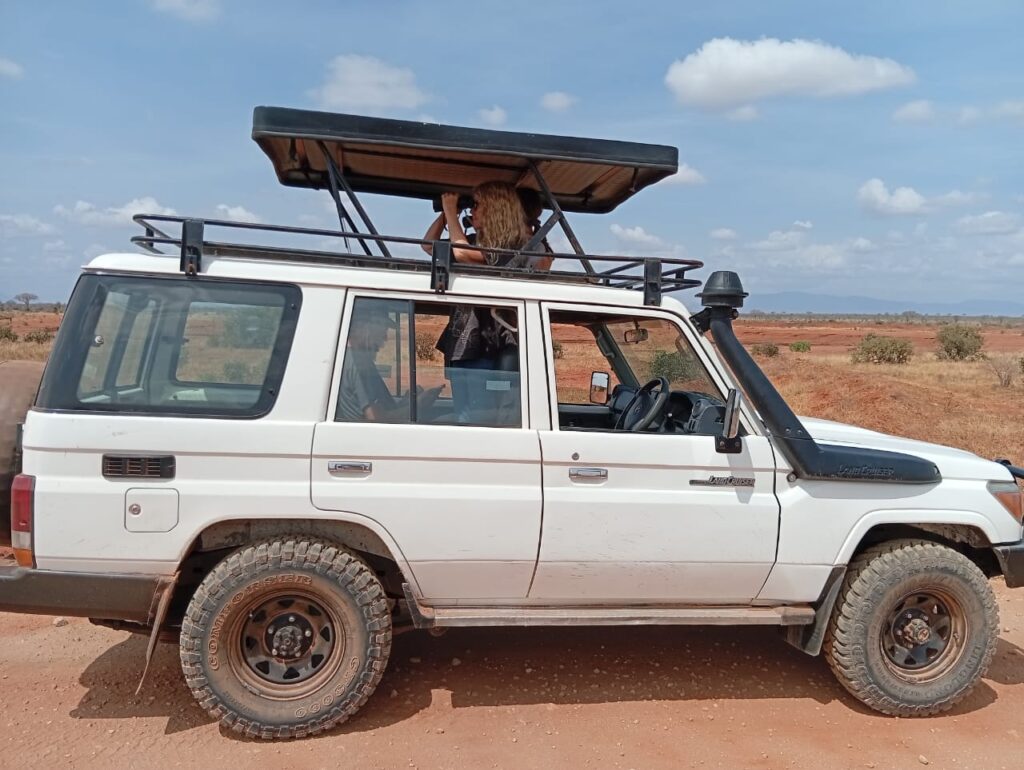 Ground clearance matters more over weeks of varied terrain than it does on a single short trip, and tire condition and spare-tyre reliability become genuinely important considerations when you’re covering serious distance over months rather than days.
Luggage space needs to accommodate a longer packing list, and if camping is part of your plan, it also needs to fit your equipment.
Comfort over long-distance driving days: proper seating, air conditioning, and a well-maintained cabin matter more the longer you’re in the vehicle. The right vehicle ultimately depends on where you plan to drive, how many people are travelling, how much luggage you’re carrying, and whether you’re camping, and that combination of factors is worth discussing properly before you commit to a vehicle for months at a time.
Where Can You Go With a Long-Term Rental in Kenya?
The Maasai Mara rewards an extended stay more than almost anywhere else in Kenya, giving you time for genuinely long wildlife experiences and access to surrounding conservancies where permitted, rather than the single rushed day many short safaris allow. Amboseli offers weeks of opportunity for Kilimanjaro views and elephant-focused safari experiences, with light and conditions changing enough day to day that an extended stay genuinely pays off for photographers in particular. Tsavo, Kenya’s largest protected area, is suited to longer southern Kenya itineraries that properly explore both Tsavo East and Tsavo West rather than passing through either in a single day. Samburu anchors a longer northern Kenya route, with its own distinct wildlife and landscape rewarding travelers who give it proper time rather than a rushed stopover. Lake Nakuru sits naturally within an extended Rift Valley itinerary, combining accessible game viewing with some of Kenya’s most striking scenery. Laikipia is particularly well suited to longer wildlife and conservation-focused trips, with its conservancy model built around exactly the kind of unhurried, extended stay a long-term rental makes possible. And Kenya’s coast, Mombasa, Diani, and the wider coastal strip, gives a long-term itinerary a genuine change of pace, letting travelers combine weeks of inland safari and camping with a final stretch of beach time before returning the vehicle or crossing onward.
Who Handles Maintenance During a Long-Term Rental?
Maintenance on a long-term rental is not left to chance, and it shouldn’t be treated as an afterthought by any operator offering vehicles for months at a time. Scheduled servicing is planned around the vehicle’s normal oil and service intervals, meaning a rental running one, two, or three months will typically fall due for at least one scheduled service, arranged around your route and communicated in advance rather than sprung on you mid-trip. Tyre checks and fluid checks are part of routine maintenance over an extended rental, alongside periodic mechanical inspection appropriate to the distance and terrain the vehicle is covering. If you notice a mechanical issue during your rental, reporting it promptly is the customer’s responsibility, and the process from there is straightforward: the issue is assessed, and authorization for any repair is confirmed before work proceeds, so you are never left guessing whether a repair is covered or who is arranging it. If maintenance is required during your rental, the team works with you to schedule it around your itinerary wherever possible, minimizing disruption to your route rather than simply pulling the vehicle out of service without warning.
What Happens If My Long-Term Rental Breaks Down?
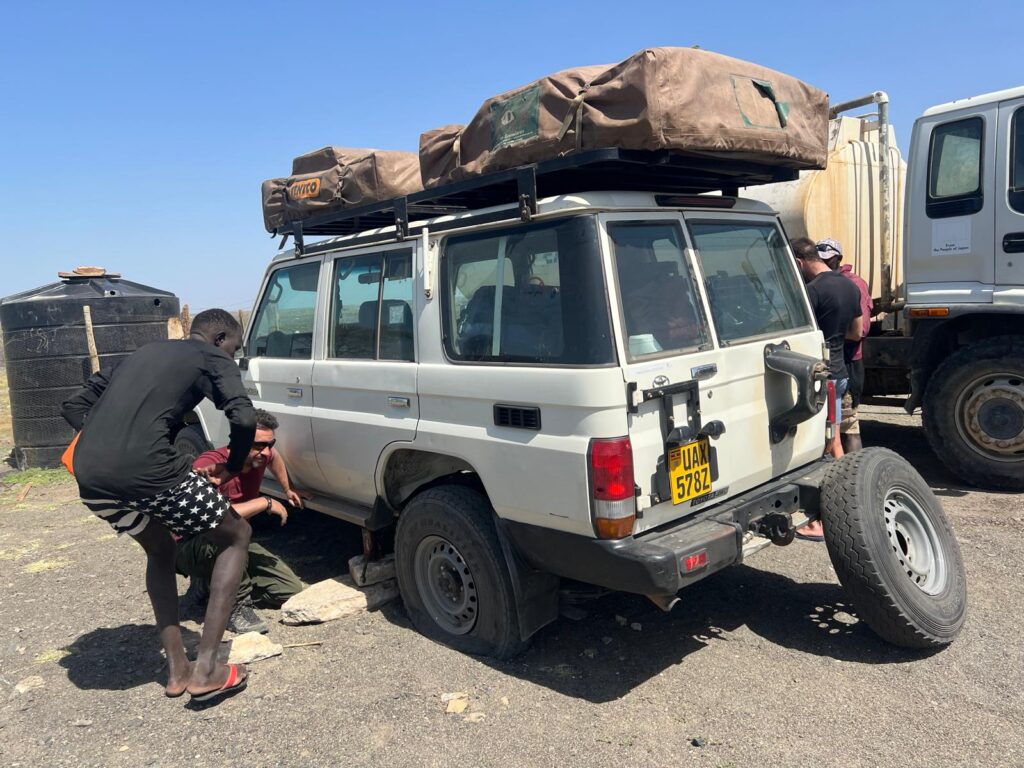 This is one of the most common worries for anyone committing to a vehicle for weeks or months, and it deserves a straight answer. If your vehicle breaks down, you call the emergency contact provided at handover, and the team responds according to your location. Response times naturally vary between Nairobi, a major town, and a remote park or rural route, and this scenario is discussed openly at handover rather than glossed over. If the vehicle cannot be repaired on-site, towing is arranged and repairs are done at the roadside for minor issues or at a workshop for anything more involved. If the vehicle cannot be made roadworthy within a reasonable timeframe, a replacement vehicle is arranged so your trip isn’t derailed by a single mechanical issue. In the event of an accident, a clear procedure is followed covering documentation, reporting, and next steps, all explained at handover so you know exactly what to do in the moment rather than having to work it out under stress. Communication throughout any breakdown or accident is a two-way responsibility; the team keeps you informed of progress, and you’re expected to keep them informed of your situation and location, particularly in remote areas or inside national parks where response logistics are naturally more involved than on a paved highway near Nairobi.
How Self Drive Kenya Prepares a Vehicle for a Long-Term Rental
Before any long-term rental leaves Nairobi, it goes through a structured preparation process rather than a quick once-over. This includes a full vehicle inspection covering general condition inside and out, a check of all four tires for wear and pressure, a check of the spare tire to confirm it is roadworthy, a check of fluid levels including oil, coolant, and brake fluid, an inspection of the 4×4 system where applicable to the vehicle, a battery check appropriate to a rental expected to run for weeks or months, a check of all vehicle documentation to confirm it is current and complete, a check of any camping equipment included in your rental against your booking, a full interior and exterior clean, a record of any existing damage so nothing is ambiguous at handover, and completion of a formal handover checklist reviewed together with you before you take the keys. This process exists so that a month or three months into your rental, you are driving a vehicle that was thoroughly prepared on day one, not one that happened to be available.
The Long-Term Rental Agreement
Before booking, it’s worth having clarity on the following, all of which should be set out plainly in your rental agreement rather than left implicit: the rental period itself, the deposit required and how it’s handled, the payment schedule across a multi-week or multi-month rental, mileage terms, who is responsible for fuel, the insurance and excess that applies, how maintenance is handled during the rental, what happens in the event of a breakdown, the accident procedure, how damage is assessed and charged, what constitutes unauthorized use of the vehicle, the policy on late returns, how extensions are handled if you decide to keep the vehicle longer than planned, the cancellation policy, whether and how cross-border travel is permitted, camping equipment responsibility specifically, and the expected condition of the vehicle at return. None of these details should come as a surprise partway through a long rental; it’s exactly why reviewing the agreement properly at handover matters more, not less, the longer your booking runs.
What Happens If Camping Equipment Is Damaged?
This is addressed directly rather than left vague: our current rental agreement treats rooftop tents and camping equipment separately from the vehicle’s own insurance coverage, and this distinction should be understood before you book rather than discovered after an incident. In practical terms, normal wear and tear on camping equipment through ordinary use over a long rental is expected and not charged to you, while damage caused by misuse or negligence is generally the renter’s responsibility, assessed against a deposit held for the equipment. Given that a long-term rental means camping gear is in use for weeks rather than days, it is worth confirming the specific equipment-liability terms for your booking directly with the team before departure so you know exactly where you stand for the full duration of your trip.
What’s Included With a Long-Term Rental?
Vehicle: a properly inspected and prepared 4×4, matched to your group size and route, with documentation confirmed current for the full rental period.
Camping: where selected, camping equipment appropriate to your chosen configuration, checked against your booking at handover, and covered under the equipment terms described above.
Driver: included only if you have booked the driver-guided option; self-drive rentals do not include a driver unless specifically arranged.
Support: ongoing assistance for the duration of your rental, including the breakdown and maintenance procedures described above.
Documentation: vehicle registration and rental paperwork appropriate to your route, including any cross-border documentation where applicable.
Not included: fuel, park entry fees, campsite fees, food, personal expenses, driver accommodation where a driver-guide is booked, insurance or excess items outside the agreed policy, equipment damage outside normal wear and tear, and any other charges specific to your particular rental, all of which are set out clearly in your quotation before you book.
Long-Term Car Rental in Kenya for International Travelers
International travelers renting long-term should plan around a handful of standard requirements: a valid driving license recognized for use in Kenya, a passport or other accepted identity document, meeting the applicable minimum age requirement for rental, and the payment and deposit terms confirmed at booking.
 An International Driving Permit is required or recommended depending on your home country’s license and Kenyan requirements at the time of your rental, and the issue is worth confirming directly before you travel. Every self-drive rental includes a driving orientation at handover, covering the vehicle itself as well as practical guidance on Kenyan road conditions and driving norms. Emergency contacts are provided as part of your handover documentation, and navigation support, whether GPS, offline maps, or route guidance, can be arranged for the length of your rental. Insurance terms are explained clearly at handover as described earlier on this page, and if your long-term rental includes cross-border travel into Uganda, Tanzania, or Rwanda, the specific documentation and permit requirements for that route are confirmed with you before you cross, rather than assumed to be covered automatically.
Self-Drive or Driver-Guide: Which Fits Your Long-Term Trip?
| Choose Self-Drive If: | Choose Driver-Guide If: |
| You want independence. | You don’t want to drive. |
| You enjoy road trips. | You want to relax. |
| You’re comfortable navigating. | You want local knowledge. |
| You want privacy. | You want safari guidance. |
| You want control over your schedule. | You’d rather someone else handle driving. |
Not sure? Tell us your route, number of travellers, and travel style, and the team can help you decide whether self-driving or a driver guide makes more sense for a rental of this length.
Who Should NOT Rent for the Long Term?
Long-term rental may not be the ideal choice if you’re only travelling for a few days, if your itinerary is still very uncertain and likely to change significantly, if you don’t actually need a vehicle every day of your stay, if a guided safari package with fixed accommodation would better fit what you’re looking for, if the vehicle would spend most of the rental period sitting unused while you’re based in one place with limited driving needs, if you only need a vehicle for a few safari days, or if a shorter rental may make considerably more sense, and the team would rather steer you toward the right length of rental than sell you more vehicle time than your trip actually needs.
Why Choose Self Drive Kenya for a Long-Term Rental?
Rather than simply asserting reliability, it’s more useful to show what actually backs it up.
There is a real fleet behind this page, not a stock photo library; you can see and inspect the vehicles before committing to weeks or months with one of them.
There are real camping setups, with the tents and equipment described throughout this page genuinely available to view before booking.
Rental agreements are transparent and available for you to review in full before you sign anything, and pricing is explained clearly, walking through the factors that actually affect your quote rather than a single opaque number.
Vehicle preparation follows the documented process described above, and the team you deal with has genuine, on-the-ground experience preparing and handing over vehicles for exactly this kind of extended Kenya road trip, day after day.
If your booking includes a driver guide, we share their relevant experience and qualifications with you directly. and
The company has a genuine physical presence, a Nairobi office you can visit, not just a booking platform with no fixed address. And this page itself, along with our destination-specific route guides, reflects first-hand operational knowledge of Kenya’s roads and parks rather than content assembled from other websites. The goal isn’t for a customer to read “we are reliable” and take it on faith, it’s for them to look at all of this and conclude, on their own, that this company has systems.
Before You Leave, You Should Know
What you’re paying. What vehicle are you receiving? What’s included? What’s excluded? What happens if the vehicle breaks down? What happens after an accident? Who to contact. Where to return the vehicle. And what happens if you need more time? Every one of these should be clear to you before you drive out of Nairobi—not something you’re left to work out mid-rental.
How to Book a Long-Term Car Rental in Kenya
Booking starts with telling the team your dates, followed by where you plan to travel across Kenya and, if relevant, beyond its borders. From there, you’ll confirm how many people are travelling, whether you want self-drive or a driver guide, and whether you want camping equipment included in your rental. You’ll choose your preferred vehicle from the options that suit your group and route, and the team will assess the full rental requirements based on everything you’ve shared. You’ll then receive a detailed quotation covering the vehicle, duration, and any options you’ve selected, followed by the chance to properly review the rental terms before committing to anything. Once you confirm your booking, the vehicle and any camping equipment are prepared and handed over following the process described earlier on this page, and from there, your Kenya adventure begins.
Best Time to Travel for a Long-Term Kenya Rental
 Because a long-term rental often spans several months rather than a single fixed window, seasonal planning matters differently than it does for a short trip. Kenya’s dry seasons — broadly June through October and January through February — offer the most reliable road conditions and the strongest wildlife viewing, with the wildebeest migration in the Maasai Mara typically peaking between July and October, making this period especially popular for long-term bookings built around an extended Mara stay. Demand across the rental market is naturally higher during these months, so booking a long-term vehicle well ahead of a dry-season start date is worth doing regardless of trip length. The shorter rains around November and the longer rains around March through May bring quieter roads and often better vehicle availability, along with lush, dramatic scenery, though murram routes in some parks become more demanding, which is worth factoring into route planning for a long rental spanning the wetter months. Because a long-term rental frequently crosses multiple seasons within a single booking — a three- or six-month rental, for instance, may run through both dry and wetter periods — route flexibility and ongoing communication with the team about current conditions matter more over an extended rental than they do for a short, fixed-date trip.
Frequently Asked Questions
What is long-term car rental in Kenya? It is a rental arrangement covering several weeks or months rather than a few days, suited to extended travel, safari and camping trips, expatriate assignments, business use, and research or photography fieldwork, with pricing based on vehicle, duration, mileage, insurance, and any additional equipment.
Can I rent a car in Kenya for one month?
Yes, one-month rentals are common, with servicing and mileage planned around the vehicle’s normal intervals for a rental of that length.
Can I rent a 4×4 for several months?
Yes, multi-month rentals are available and are typically treated as a more customized arrangement given the longer commitment involved.
How much is a monthly car rental in Kenya?
Cost depends on vehicle type, mileage, insurance, whether you choose self-drive or a driver-guide, and any camping equipment, so it’s calculated per trip rather than published as a single fixed monthly figure.
Is long-term rental cheaper than daily rental?
Not automatically, it depends on the total cost across the full rental period compared with the sum of several shorter rentals, including insurance, mileage, and fuel.
Can I rent a Land Cruiser long-term?
Yes, the Land Cruiser V8, Land Cruiser LX, and Extended Land Cruiser are all available for long-term rental, self-drive, or with a driver.
Can I self-drive a long-term rental?
Yes, self-drive is available for long-term rentals, with the renter responsible for driving, navigation, and vehicle care throughout the period.
Can I hire a driver for a long-term rental?
Yes, a driver guide can be arranged for the full rental period, with the fee either included in your quoted rate or priced separately depending on the arrangement.
Can I add camping gear to my long-term car rental in Kenya?
Yes, camping equipment can be added to a long-term rental, subject to vehicle and equipment availability.
Can I rent a rooftop tent long-term?
Yes, a rooftop tent is one of the available camping configurations for a long-term rental, alongside ground-tent options.
Can I use the vehicle for a safari?
Yes, long-term rentals are commonly used for extended, multi-park safari itineraries.
Can I take the vehicle into national parks?
Yes, subject to standard park entry rules and fees, which apply regardless of rental length.
Can I cross into Uganda or Tanzania?
Yes, you can cross into Uganda or Tanzania where permitted under your specific rental agreement, provided you have confirmed the necessary cross-border documentation and permits before you travel.
Is insurance included on my long-term car rental in Kenya?
Yes, vehicle insurance is included as part of the rental, with the specific terms and excess explained clearly before booking.
Is there a security deposit?
Yes, a deposit is required, with the amount and terms confirmed at the time of booking.
Is mileage unlimited?
The answer depends on the specific rental agreement and should be confirmed before booking, particularly given how much distance a long rental can accumulate.
Who pays for fuel?
The renter is responsible for fuel throughout the rental period.
Who pays for servicing?
Scheduled servicing is arranged and handled by the company as part of the rental; specifics are confirmed in your rental agreement.
What happens if the vehicle breaks down?
You contact the emergency number provided at handover, and the team arranges towing, repair, or a replacement vehicle depending on the situation, as described in full above.
What happens after an accident?
A clear reporting and documentation procedure is followed and explained to you at vehicle handover before you begin your rental.
What happens if a tire is damaged?
Every vehicle includes a checked spare tire and the tools to change it; responsibility for tire damage depends on the cause, as set out in your rental agreement.
What happens if camping equipment is damaged?
Normal wear and tear is expected and not charged; damage from misuse is generally the renter’s responsibility, assessed against the equipment deposit, as explained above.
Can I extend my rental?
Yes, extensions can generally be arranged, subject to vehicle availability and updated terms for the additional period.
Can I shorten my rental?
The answer depends on your specific agreement and should be discussed with the team as early as possible if your plans change.
Can I change my return location?
Yes, one-way returns within Kenya and across the border can be arranged, including at Mombasa, Kilifi, Watamu, Emali, Voi, the Maasai Mara, Namanga, Arusha, Dar es Salaam, Kigali, Kampala, and Entebbe.
Can I take the vehicle camping?
Yes, a long-term rental can be paired with a full camping setup for an extended camping safari.
What vehicle is best for a long safari?
The answer depends on group size and route; the vehicle comparison table above and the individual vehicle pages give a fuller picture.
What vehicle is best for a family?
A standard or extended Land Cruiser, depending on family size and luggage needs, is the usual recommendation.
What vehicle is best for long-term camping?
A Land Cruiser or safari van configured with a rooftop or ground tent, matched to your group size, as covered in the long-term vehicle comparison above.
What documents do international travellers need?
A valid driving license, passport, and generally an International Driving Permit, alongside standard age and payment requirements, as detailed above.
Can I rent a car for three months?
Yes, three-month rentals are available and treated as a genuine long-term arrangement with at least one scheduled service expected.
Can I rent a car for six months?
Yes, six-month rentals are available and common among expatriates, researchers, and organizations with extended assignments.
Can businesses rent vehicles long-term?
Yes, businesses and organizations regularly arrange long-term rentals for employees, field operations, or extended assignments.
Can researchers rent 4×4 vehicles?
Yes, researchers and photographers undertaking extended fieldwork are a common long-term rental use case.
How does vehicle handover work?
Handover follows the structured preparation and checklist process described above, reviewed with you in person before you take the keys.
How far in advance should I book?
Book as early as practical, especially for dry-season travel between June and October and December through February, when demand across the rental market is highest.
Get a Long-Term Rental Quote
A useful long-term quote starts with specifics rather than a generic enquiry. Share your pickup date and return date, your preferred pickup location and return location, the number of travellers in your party, your vehicle preference if you already have one in mind, whether you want self-drive or a driver-guide, whether you need camping equipment and specifically a rooftop tent if that’s your preferred setup, the destinations you’re planning to visit, whether your trip stays within Kenya or crosses into neighbouring countries, a rough sense of your itinerary even if it isn’t fixed yet, and any special requirements worth knowing about in advance. Send that through, and the team will put together a genuinely tailored quotation rather than a one-size-fits-all rate, get your long-term Kenya rental quote and start building the trip properly from the first message.
One Vehicle. One Journey. More Freedom.
Whether you’re spending a few weeks exploring Kenya, planning a month-long camping safari, working on an extended assignment, or combining wildlife destinations with the coast, Self Drive Kenya can help you choose a vehicle and rental arrangement that fits the journey. Three pathways run through everything on this page: self-drive, where the route, the schedule, and the adventure are entirely yours; camping, where the vehicle becomes your base, your campsite, and your Kenya; and driver-guide, where you sit back, explore, and let an experienced local professional handle the road. None of these is the “correct” way to spend weeks or months in Kenya; they are three genuine options, and the right one depends entirely on the kind of traveller you are.
If you’ve read this far, you already understand more about what a long-term Kenya rental actually involves; the vehicle preparation, the maintenance process, the insurance distinctions, and the breakdown procedure, than most travellers do before they commit to months with a single car. That’s deliberate. An extended journey through Kenya, and potentially across its borders into Uganda, Tanzania, or Rwanda, deserves a vehicle arrangement that leaves nothing to chance. Every long-term rental follows the same preparation and handover process described above, every agreement is reviewed with you in person, and every vehicle recommendation is matched to your actual route rather than whatever happens to be free. When you’re ready, get in touch with your dates, your rough itinerary, and your group size, and the team will help you turn it into a properly planned long-term Kenya adventure.